Today in the tonalpohualli, the count of days. Its 260 days turn 13 numbers with 20 day signs, so each pairing returns once in every 260 days.
The count is a living tradition: K’iche’ Maya daykeepers in highland Guatemala keep their own 260-day count, the cholq’ij, today. Here it is shown only as a calendar; ZOTHEOS does not read fortunes from it.
The number is written with dots, as the codices write it, one dot for each count. The rings are added here to show the rest of the thirteen, and the dots are grouped in fives for reading. Computed in your browser with the Caso correlation, in which 13 August 1521 (Julian; 23 August in today’s calendar) was 1 Coatl, Serpent. The day turns at your local midnight.
No investors · No ads Built by a Marine Corps veteran In development since January 2024Hardware-aware design, built toward broader accessPrivate local editionLocal model inference3 reasoning coresTools in one workspace
No investors · No ads Built by a Marine Corps veteran In development since January 2024Hardware-aware design, built toward broader accessPrivate local editionLocal model inference3 reasoning coresTools in one workspace
IN XOCHITL · IN CUICATLflower and songFLOR Y CANTO
Counts what can be counted, and weighs what holds. The Analyst pins claims to evidence and refuses to round up.
It asks
What does the data actually say, and how strong is the evidence?
Role-specific model choices · Model Setup
II.
Humanist
Witnesses
Reads what is felt and what matters. The Humanist keeps the human stakes in frame when the numbers try to flatten them.
It asks
Who is affected, and what does this mean for the people living it?
Role-specific model choices · Model Setup
III.
Skeptic
Doubts
Hunts what is silenced and what hides. The Skeptic argues against the strongest emerging consensus, not against you, so easy agreement gets tested.
It asks
Where are the other two quietly agreeing without checking each other?
Role-specific model choices · Model Setup
You decide.
Architecture
How one answer is forged.
One question, three perspectives, a decision that stays yours. In the standard full council, each mind builds on the drafts before it. Synthesis brings their reasoning together without making agreement a guarantee of truth.
Fusion architecture
A council, not a vote. Follow how a question becomes a draft, where challenge enters, and where human judgment begins.
Standard full council · sequential deliberation
Start hereYour question + supporting sources
Sources enter when supplied or retrieved. The kind of question guides the emphasis.
01 · Examine
Analyst
Builds the first draft from the question, reasoning and available evidence.
Reads the question and context
02 · Consider
Humanist
Adds the human perspective: who is affected, what matters, and what the first draft overlooks.
Also reads the Analyst's draft
03 · Challenge
Skeptic
Questions assumptions and the strongest agreement between the earlier perspectives.
Also reads both earlier drafts
Optional extra cross-critique. When enabled, the minds critique each other's drafts before synthesis. This extra round is off by default.
04 · Bring together
One synthesized draft
Combines the perspectives, with emphasis guided by the question. Agreement and confidence signals are aids to inspection, not proof.
05 · Decide
You
Inspect the sources, disagreements and limits. Accept, question or reject the draft. The decision stays with you.
Illustration of the standard full council route, not a live run. Modes, settings and model availability can change the stages.
Your deviceConnection needed for model downloads and optional toolsYour question + supporting sourcesAnalystHumanistSkepticOptional extra cross-critique, off by defaultStrongest agreement, questionedSynthesisAnalyst's modelYou
The whole routeStep 0 of 7
Read the route as text
You bring a question. Sources enter when supplied or retrieved. The models run on your hardware.
The Analyst builds the first draft from the question, reasoning and available evidence.
The Humanist also reads that draft, possibly shortened, and adds who is affected, what matters and what it overlooks.
The Skeptic also reads both earlier drafts and argues against their strongest agreement, not against you.
One synthesized draft combines the perspectives. Synthesis normally reuses the Analyst's model, so it is not an independent fourth judge.
Accept, question or reject the draft. The decision stays with you.
Agreement is not proof. This illustrates the standard full council route, not a live run. Timing is not to scale.
The optional extra cross-critique round is off by default. A separate debate mode can use additional rounds. Modes, settings and model availability can change the stages.
Press Play to follow the route, or step through it at your own pace.Step through the route at your own pace.
Inspect the sources, disagreements and limits. Accept, question or reject the draft. The decision stays with you.
Open question
Method, research and limits
What the route means. Later minds receive earlier drafts as context; that context can be shortened. Synthesis normally reuses the Analyst's model with a synthesis prompt, rather than adding an independent fourth judge. Question-based emphasis is prompt guidance, not a measured competence score. A separate debate mode can use additional rounds.
Why confidence needs care.Kadavath et al., Language Models (Mostly) Know What They Know studies model self-evaluation and its limits. ZOTHEOS also uses heuristic quality signals. A stated confidence level is not automatically a calibrated probability. Models can share mistakes, and additional discussion cannot guarantee a correct answer.
Local-first
Inference runs on your hardware through llama.cpp, and conversations, vault and memory are stored on the device running the local edition.
Connection needed for model downloads and optional tools
Evidence vault
Your sources become a local knowledge base, and answers cite them as [Vault:Source], checked in strict mode.
Tiered sourcing · cross-encoder reranking
Anti-consensus Skeptic
The Skeptic argues against the strongest agreement between the other two minds, not against you.
Aimed at consensus, by design
Confidence made visible
Evidence-derived, model-stated and blended signals appear when available. They help you inspect an answer; they are not proof that it is correct.
Evidence
Model-stated
Blended
Specimen, not a live score
Proof
Built to be checked.
ZOTHEOS includes signed result receipts, local forecast records, evidence-linked corrections and backend network checks. They make the work inspectable, and their desktop integration is part of the current validation.
01
Signed receipts
Verify result-receipt signatures offline. A signature check establishes whether the receipt matches its signing key; it does not prove the answer is correct.
02
Prediction ledger
Forecasts the system logged, scored against what actually happened. A local track record with a reliability diagram.
03
Belief drift
When the council changes its mind, the full chain stays: v1 to v2 to v3, with the evidence that moved it. No memory-holing.
04
Corrections in the open
Every flagged correction is kept with provenance in an immutable log, and approved or rejected where you can see it.
05
Backend network checks
A backend network ledger and canary check make backend controls inspectable. They do not establish that every desktop-shell or WebView2 connection is blocked.
Specimens, not live data
Trust needs evidence. ZOTHEOS would rather show you the ledger.
ZOTHEOS also measures its own catch rate. The method is published; the numbers print when they are ready, not before.
Workspace
One workspace, many tools.
Everything lives in one overlay: a fuzzy command palette, keyboard driven, arranged in three zones. A search that matches nothing offers to run itself as a fact-check, a memory search, or an investigation. No dead ends.
The Ethics Sentinel is designed to refuse help building systems of control while allowing fact-seeking accountability questions.
Guardrails remain inspectable and subject to testing.
Start with a question that matters.
Open an example prompt. These illustrate what to ask, not recorded answers or measured results.
Think through a decision
Example prompt
I am deciding whether to repair or replace my old computer. Help me compare the costs, the useful life and the environmental tradeoffs. What assumptions should I check before deciding?
Question a document
Example prompt
Help me examine this document's main claim. Which statements have supporting evidence, which are assumptions, and what would change the conclusion?
Learn a difficult concept
Example prompt
Explain how an AI model can sound confident and still be wrong. Start with an everyday analogy, show where the analogy breaks down, and help me check my understanding.
The hardware you already have
Your hardware. Your intelligence.
The direction is broad access: use the computing power already available, from workstations and everyday computers to older PCs and kiosks. Fit the model to the machine and the task. Current desktop release testing focuses on Windows x64.
Compact systemsSmall PCscompact and embedded hardware
Small-model directionSmall footprint
These are hardware families ZOTHEOS aims to serve, not a verified compatibility list. A supported operating system and processor, enough memory and storage, and a compatible model still matter. Compact-system startup and other platforms remain in development.
Model freedom
Your council. Your choice of models.
Explore an expanding ecosystem of compatible local models. Browse Hugging Face or import GGUF files you already have. Starter packs are a beginning, not a fixed catalog.
Choose the models behind Analyst, Humanist and Skeptic while keeping the same local workspace. Each model retains its own license.
What can I bring?
Compatible chat models in GGUF format. GGUF is the model-file format used by the local engine. Supported model architecture, available memory and the model's license determine what can run.
Hugging Face, GitHub or elsewhere?
Model Setup searches Hugging Face. A compatible file obtained from GitHub or another legitimate source can be imported locally. The built-in browser is not a general GitHub downloader.
How does local setup work?
Install the app.The Windows package follows release validation.The Windows installer and its checksum are on the release page.
Choose compatible models.Download or import files that fit your machine and their licenses.
Work locally.Inference runs on your device after setup. Optional network tools remain separate choices.
Help people remember better, not remember for them.
Project memory awareness keeps the facets you choose in view and offers techniques for organizing what you learn. Project guidance is distinct from conversation history and the local memory controls.
What keeps recurring across compounding, taxes and market history, and what remains open?
Technique
FeynmanExplain it back as if to a 12‑year‑old. Gaps in your explanation are gaps in your understanding.1 / 5
What ZOTHEOS Remembers
Prefers plain-language explanations
Facets at project creationName the 3 to 5 angles you're exploring. ZOTHEOS keeps them in mind every time you ask a question inside the project.
Periodic recapBuild a recap prompt from recent conversations in this project. Review it, then send it to explore recurring themes and what remains open.
Memory techniquesFive built-in techniques: Feynman, spaced repetition, chunking, dual coding, method of loci. Suggested when the content type warrants it.
Project awareness stays scopedProject facets apply inside the project. Conversation history and local memory have separate controls; leaving a project does not erase them.
What ZOTHEOS RemembersEvery durable fact it has learned about you, on one screen: visible, searchable, and deletable.
Console
See it think.
An illustration of the council flow: separate roles, then a synthesized answer. This animation is not a live query, performance measurement or signed result.
ZOTHEOSConsoleFUSION
Roles: Analyst, Humanist, SkepticEvidence: illustratedInference: local designAEGIS: guardrail designWorkspace: tools
›How can AI systems be designed to promote universal peace while protecting individual rights?
HumanistThe cost falls on the people being watched█The cost falls on the people being watchedqueuedHumanist: The cost falls on the people being watched
SkepticA peace system can become a control system█A peace system can become a control systemqueuedSkeptic: A peace system can become a control system
Fused answerILLUSTRATION
Dissent preservedSkeptic “A peace system can become a control system”
Your own workspace. Your chosen models. The Windows desktop is in release validation.The Windows desktop is available to download.
Mission
Give power back to humanity.
Truth, dignity and sovereignty guide ZOTHEOS, especially in service to people whose voices have been silenced or overlooked. The purpose is to help people examine evidence, strengthen their own judgment and act with care for one another and the living world. You remain free to question the answer, disagree and decide.
Truth with evidence. Dignity without exception. Judgment that remains yours.
Universal peace is the moral horizon for ZOTHEOS. The work begins with accessible knowledge, respect for human rights and the freedom to think without coercion. Accountability requires evidence, fair processes and the dignity of every person.
Evolved Intelligence is a research direction toward accountable learning, useful self-correction and understanding. It is not a claim of consciousness, infallibility or absolute truth.
Care for people includes care for land, water and the ecosystems that sustain life. Responsible computation requires assessing energy, hardware and resource costs honestly. Local AI has a footprint too; environmental benefit must be measured, not assumed.
Evidence before certaintyThe standard: show sources, preserve uncertainty and correct mistakes openly.
Dignity without exceptionChallenge harmful claims and conduct without dehumanizing the person.
Sovereignty in practiceHelp people understand their choices. Respect privacy, independent thought and control over personal information.
Responsibility beyond the screenMake room for overlooked histories and communities' own published accounts. Consider consequences for people and the living world.
ZOTHEOS Theater ·Indigenous voices first ·Worldwide
Where ZOTHEOS listens.
Indigenous voices come first, in films, shorts and recorded conversations from around the world, each from an official source. Creators, publishers and viewing notes stay in plain view. You can pause, turn sound on, turn captions off or choose Still at any time.
This story has a Before Watching note.Contains discussion of barriers experienced by Deaf First Nations performers. The publisher identifies Auslan as part of the series; caption accuracy has not been independently assessed. Press Play when you are ready.
This player uses its own controls for Play, sound and captions. It does not start on its own.
Before watching: Contains discussion of barriers experienced by Deaf First Nations performers. The publisher identifies Auslan as part of the series; caption accuracy has not been independently assessed.
Pauses the ambient light around the screen.
Featured preview
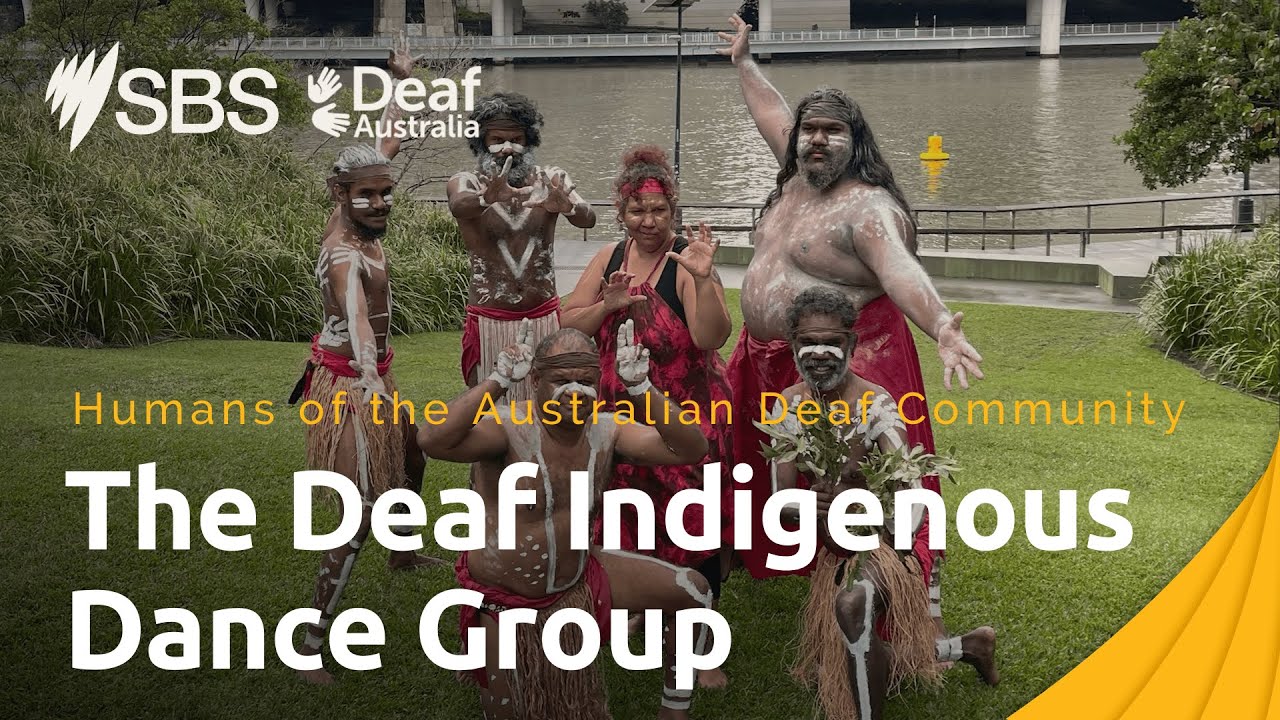
The Deaf Indigenous Dance Group
With members of the Deaf Indigenous Dance Group, in their own words. By SBS and Deaf Australia; published by SBS On Demand.
Featuring members of the Deaf Indigenous Dance Group, formed in 1997, in their own words. The publisher’s description does not name the individual members.
From Humans of the Australian Deaf Community, a series created by Paula Thornton, Deaf Australia. Produced by SBS and Deaf Australia; published by SBS On Demand.
Recorded Program · Recorded Talk · 6m 45s
Recorded program, not a live broadcast. Availability, accounts and regional restrictions can change.
Members of the Deaf Indigenous Dance Group discuss dance, culture and Deaf pride, including storytelling through sign language and vibration. An official video-podcast portrait.
Full Credit
Featuring
Members of the Deaf Indigenous Dance Group (DIDG), formed in 1997. The publisher’s description does not name the individual members.
Series
Humans of the Australian Deaf Community, the second series of Our Deaf Ways, a video podcast by SBS and Deaf Australia
Credits
Series created by Paula Thornton, Deaf Australia; additional editing by Max Banyat; music by Max Gosford.
Produced by
SBS and Deaf Australia
Publisher
SBS On Demand, on its official YouTube channel
Year
Uploaded in April 2025. The source does not state a production year.
Runtime
6m 45s
Viewing
Recorded program, not a live broadcast. Availability, accounts and regional restrictions can change.
Audience
Made for Deaf, DeafBlind and hard of hearing people who use Auslan; the publisher also invites hearing viewers.
Place
Australia
Captions
English captions supplied with the upload, not automatic captions. Their accuracy has not been independently assessed.
Chosen by ZOTHEOS from the Theater. Featuring these stories here does not mean their makers, publishers or the people in them endorse ZOTHEOS.
Privacy: this section contacts YouTube and the National Film Board of Canada as it approaches the screen, once the page has been near it for half a second. A link or the End key that jumps past it contacts neither; scrolling past it, even quickly, usually does, and so does a link that lands near it. They then receive your IP address and request information. YouTube’s player also loads parts from other Google services and keeps some of its own settings in this browser’s storage. Its privacy-enhanced domain does not make playback anonymous, and requests to Google services can carry cookies your browser already holds for Google. When the preview plays, including when it starts by itself, YouTube receives playback reports.
Six stories from the Theater
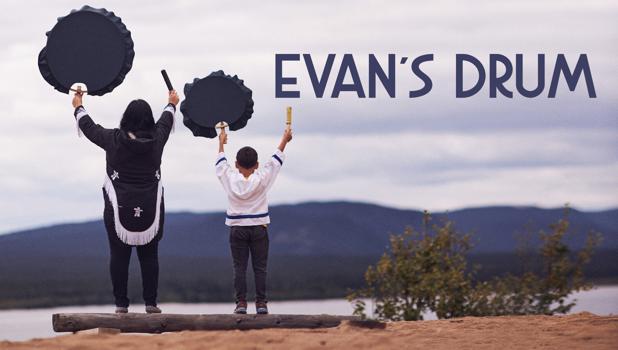
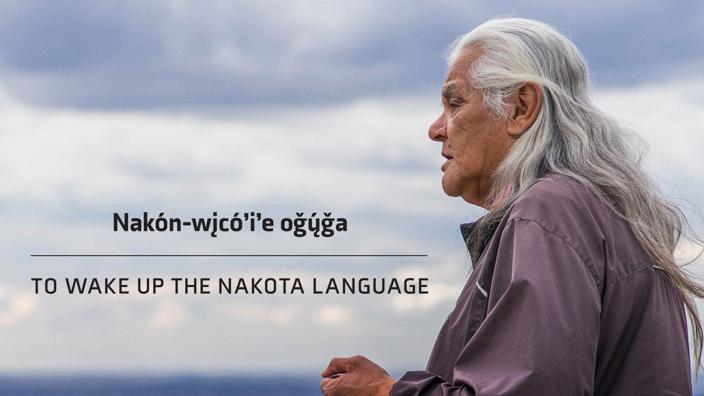
From Sápmi, the Teduray and Lambangian communities of Mindanao in the southern Philippines, Southern Africa, Labrador and Treaty 4 territory in Saskatchewan, and a Maya Q’eqchi’ territory project by AEPDI. Each one opens the Theater at that story, with its details and official source.
Watch. Learn. Question. Follow the sources and keep your own judgment.
From Understanding To Action
What Can ZOTHEOS Do For Indigenous People And Nations?
Ten practical pathways through land, representation, language and more. Follow the evidence, prepare a concrete next step and keep the decision in your hands.
Choose A Need
Check The Evidence
Prepare A Concrete Ask
Decide And Review
10 pathways. Each includes something you can prepare offline. Each also has one step on this website, one you do yourself and one proposed for the app.Explore Paths To Action ↗01 · Watch
ZOTHEOS Theater
Films, shorts and conversations from official sources. Clear viewing notes, with Indigenous voices first.
Distinct peoples, histories and Nations’ own resources. A growing directory with its coverage gaps visible.
22
50
43
43
32
35
26
26
16
22
29
20
41
53
46
504 profiles in 15 regions so far, from 16 in the least covered region to 53 in the most.Explore The Directory ↗03 · Go Deeper
Histories And Resources
Continue into cited histories, languages, land and community-led knowledge.
1640s2020s112 Dated in the record, from the 1640s to the 2020s69 No date recorded yet
181 published historical facts across 129 Nations. The record here begins where the cited sources begin, not where the history begins.Follow The Sources ↗04 · Play And Learn
A Different Way In
Games and learning cards offer another starting point. The histories and sources remain yours to explore.
ZOTHEOS is built around local control and inspectable evidence. The ZOTHEOS column describes the local edition as designed: the Windows desktop is in internal testing, and these features are part of the current validation. Hosted services differ in their policies and capabilities; compare the specific service you use.
ZOTHEOSIn internal testing
Cloud services vary
Inference location
ZOTHEOSOn your hardware
Cloud services varyRemote host hardware
Account required
ZOTHEOSNo
Cloud services varyCheck access requirements
Data used for training
ZOTHEOSLocal edition stores data locally
Cloud services varyCheck the provider policy
Reasoning method
ZOTHEOSThree roles in sequence, later roles reading earlier drafts; one synthesis you review
Cloud services varyProvider-specific architecture
Citations
ZOTHEOSStrict-mode grounding checks
Cloud services varyCheck citation behavior
Confidence disclosed
ZOTHEOSSignals when available
Cloud services varyCheck available signals
Works offline
ZOTHEOSLocal inference after setup
Cloud services varyRemote features need network
Funding model
ZOTHEOSIndependent, no investors
Cloud services varyProvider-specific funding
Proof of offline
ZOTHEOSBackend ledger and canary
Cloud services varyCheck network controls
Track record
ZOTHEOSLocal forecast records
Cloud services varyCheck provider records
When it changes its mind
ZOTHEOSLogged, with the evidence
Cloud services varyCheck change records
When it is wrong
ZOTHEOSCorrections with provenance
Cloud services varyCheck correction process
Receipts
ZOTHEOSSigned, offline-verifiable
Cloud services varyCheck provider records
Frequently asked
Questions worth asking.
Does ZOTHEOS actually work offline?
Local inference runs via llama.cpp once the required models are available. Model downloads and optional network features need a connection. The local edition stores conversations and vault files on your device.
Why three models instead of one larger one?
Analyst, Humanist, and Skeptic examine questions from different angles, then synthesize an answer that can expose evidence and disagreement. Multiple models can share the same error, so agreement is not proof.
What hardware do I need?
ZOTHEOS is being developed for broad hardware access, including desktops, laptops, mini PCs, older computers and kiosks. Current desktop release testing focuses on Windows x64. Processor support, memory, storage and model compatibility still matter; compact-system startup and other platforms remain in development.
Is any of my data collected?
The local edition stores conversations, vault and memory on the device running it. This website sends waitlist emails to Formspree for milestone updates, and loads hosted fonts and media. Its Theater section contacts YouTube and the National Film Board of Canada as that section approaches the screen. Local inference and website processing are separate.
How is ZOTHEOS funded?
Development is independent and self-funded, with optional support. The local edition is free for individual use. Support does not unlock features, access, priority or influence. Institutional deployment and support may be paid; they are not required for individual local use.
What is the “evidence vault”?
A local, tiered knowledge base the council can cite. Retrieval can rerank sources, and strict mode checks grounding and citation tags. A citation still needs to be inspected against its source.
How do I know it is really offline?
The backend includes a network ledger and a canary check for its network controls. Those checks cover backend activity, not every shell or WebView2 connection. Receipt signatures can be checked offline, separately from network behavior.
What happens when ZOTHEOS is wrong?
Flagged corrections are recorded with provenance for review. Belief-drift records retain evidence linked to a change. These records make changes inspectable; they do not prove that an answer is correct.
Can kids use ZOTHEOS?
Kids Mode is not enabled in the current product. Age-band support remains planned.
What is the Smart Board?
An AI whiteboard with council prompts, document tools, charts, voice and conversation saving. Available functions depend on the configured models and tools.
Can I choose my own models?
Yes. Model Setup browses Hugging Face and imports local GGUF files, so starter packs are a beginning rather than a fixed catalog. Compatible chat models can be assigned to the council roles. Each model retains its own license, and runtime support plus available memory determine what can run. GitHub files can be imported locally when compatible; an integrated GitHub downloader is not established.
From the founder
I build and maintain ZOTHEOS as a one-person independent project.
I built ZOTHEOS because I was tired of tools that treat attention as the product and truth as optional. The internet learned to keep people scrolling; I wanted something that helps people think instead.
That purpose guides the design: analytical, human-centered and skeptical perspectives, local operation, and control over personal information. Optional online features need clear disclosure of what leaves the device. The standard is to help people think more clearly and choose for themselves.
David GarciaFounder · USMC Veteran · ZOTHEOS LLC
Be among the first
The local Windows download follows setup, installation and clean-machine validation.
The Windows download is on the release page. Join the list for release updates.
Join for ZOTHEOS development and release updates. This form sends your email to Formspree, the form processor for this site. Early access is not a promise of an immediate invitation or a finished download.
Support
Fund the mission.
Support funds independent development, testing and releases. The local edition is free for individual use. Support is voluntary and does not unlock features, access, priority or influence.
In ancient Mexico, obsidian was cut and polished into mirrors.
This mirror is dark.
Page-readable cookies0
Hosting activitynot measured here
Email signupFormspree, when submitted
Theater sectionYouTube and NFB, as the section nears
Saved theme settingnot read yet
The cookie count excludes HttpOnly cookies. This page loads hosted fonts and media; its Theater section contacts YouTube and the National Film Board of Canada as that section nears the screen; email signup sends data to Formspree. Server logs are not measured here.